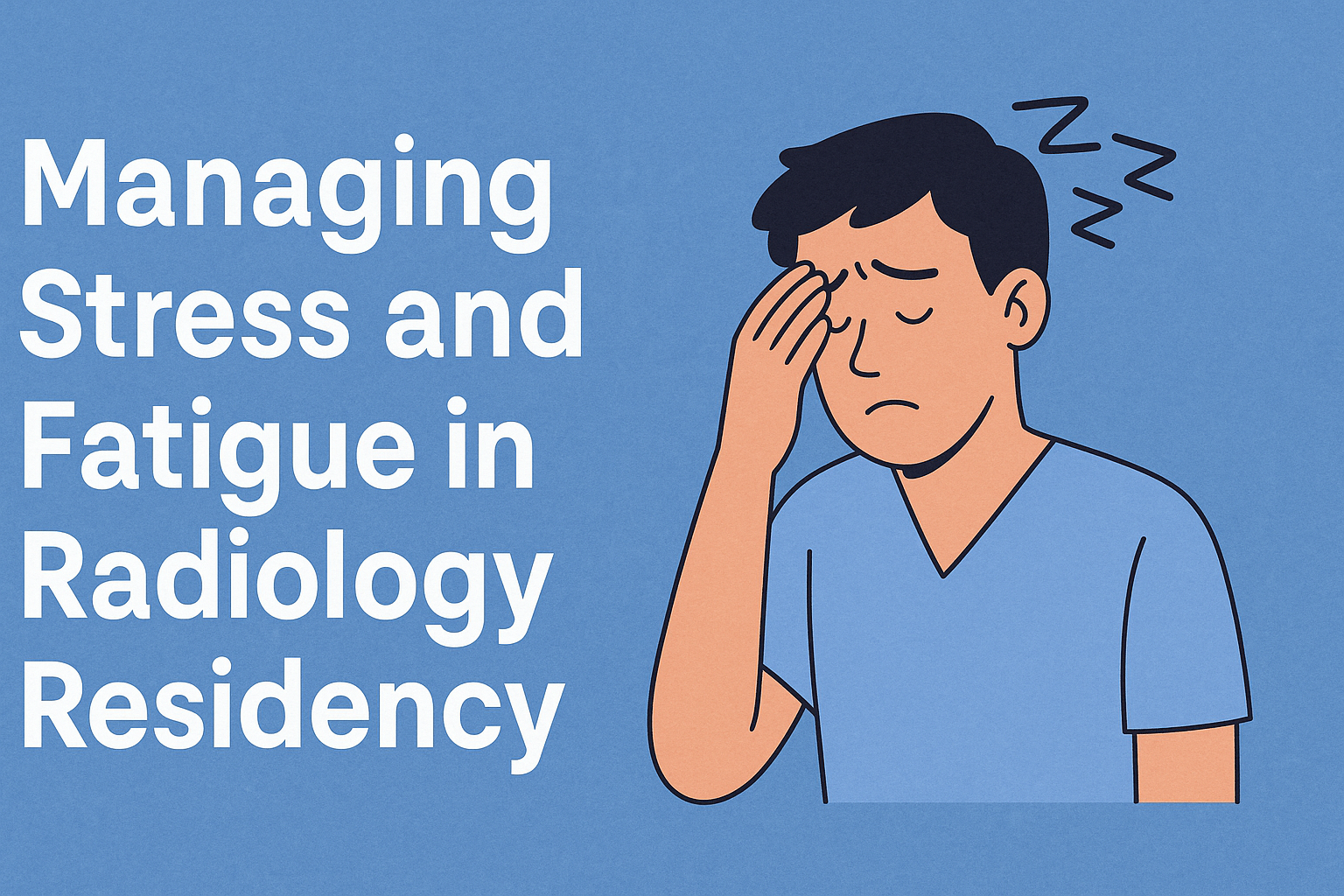
Radiology may not involve overnight surgeries or continuous ward rounds, but make no mistake—the mental and emotional fatigue is real. The long hours, high responsibility, and constant decision-making in dark, enclosed spaces can lead to burnout, especially during residency.
This guide outlines practical strategies to help radiology residents manage stress and fatigue effectively while maintaining both professional performance and personal well-being.
1. Understand the Nature of Radiology Fatigue
Radiology fatigue is not just physical. It’s mental exhaustion from interpreting complex images, the pressure of high-stakes decisions, and prolonged screen time in isolated environments.
Common Causes:
-
Long duty hours, especially night shifts
-
High reporting loads with short turnaround times
-
Pressure to study, publish, and prepare for exams simultaneously
-
Constant interruptions during focused tasks
-
Reduced feedback or peer interaction due to solitary work style
2. Recognize Early Warning Signs
-
Declining diagnostic accuracy
-
Eye strain, headaches, and sleep disturbances
-
Short temper or emotional detachment
-
Reduced motivation to study or engage clinically
-
Errors in simple tasks due to reduced concentration
Catch these signs early. Radiology burnout is real and under-recognized.
3. Time Management Strategies
-
Set clear study-reporting boundaries. Don’t mix academic reading with rushed reporting.
-
Use the Pomodoro method. 25 minutes of deep work followed by 5 minutes of break.
-
Plan the day in blocks. Dedicate fixed time slots to reporting, academics, exercise, and rest.
-
Avoid mindless multitasking. Close unnecessary tabs. Put the phone away during interpretation.
4. Protect Your Sleep
-
Use blackout curtains or eye masks if you sleep during the day after night shifts.
-
Avoid caffeine post-evening. Even one late cup can ruin your cycle.
-
Don’t use screens in bed. Blue light delays melatonin.
-
Use a fixed wind-down routine (reading, hot shower, stretching) to signal sleep time.
5. Create a Workable Reporting Environment
-
Adjust monitor brightness and use blue-light filters
-
Maintain proper ergonomic posture with back support and footrest
-
Keep your reading room ventilated and lit naturally if possible
-
Take regular screen breaks (at least 5 minutes every hour)
6. Use Peer Support Systems
-
Discuss difficult cases with friends and seniors—don't isolate
-
Join academic discussion groups to stay mentally stimulated
-
Don’t hesitate to talk about emotional burnout. Others may feel the same
7. Learn to Say No
-
You don’t have to say yes to every seminar, article, or case discussion.
-
Protect your personal time fiercely. Decline extra tasks politely when overwhelmed.
-
Choose quality over quantity—one well-done presentation is better than five rushed ones
8. Build Non-Academic Outlets
-
Engage in physical activity: walking, yoga, or a short home workout
-
Meditate daily—even 5 minutes helps clear cognitive clutter
-
Maintain a hobby that has nothing to do with radiology
-
Spend time with people outside the medical world
9. When to Seek Help
If you feel persistent:
-
Sleep disturbances
-
Feelings of worthlessness or hopelessness
-
Inability to concentrate or retain information
-
Emotional withdrawal
-
Physical symptoms like headaches, fatigue, stomach aches with no clear cause
You may be facing burnout or depression. Seek professional help early. Talking to a counselor is not a sign of weakness—it's a step toward resilience.
10. Residency Is Temporary—Your Health Is Not
Don’t burn yourself out to prove anything. Residency is intense, but it’s just a phase. Your energy, brain, and peace of mind are tools—not trophies.
Protect them.
Radiology requires precision, patience, and sharp thinking. These don’t come from pushing harder—they come from balancing better.
Manage your energy, not just your time. Rest deliberately. Learn strategically. And talk openly.
You’re not a machine. You’re a radiologist in training—your most powerful asset is a clear, rested mind.